
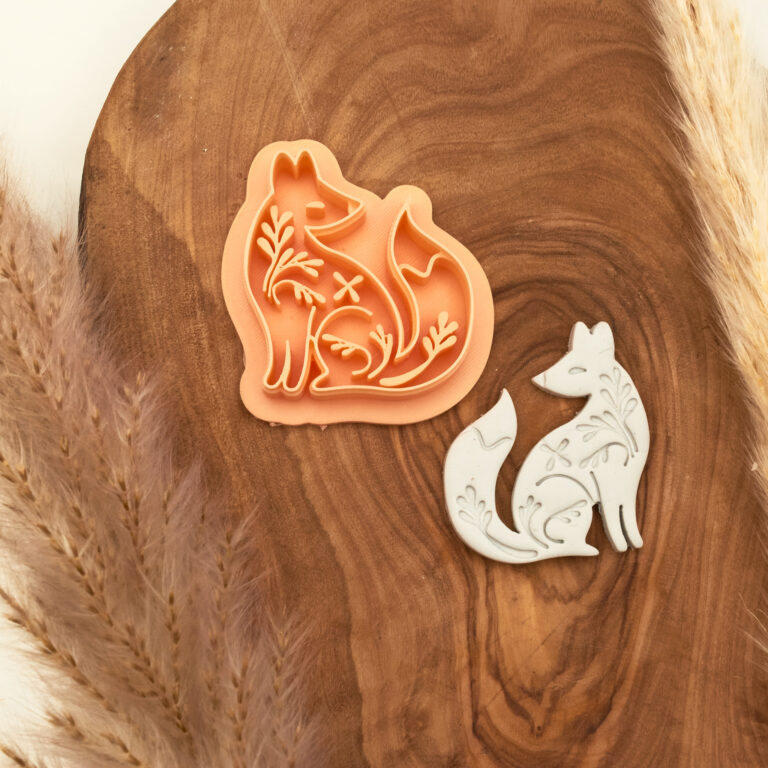
Getting clean, crisp edges with polymer clay cutters is the foundation of professional-looking handmade jewelry. If you’re spending too much time sanding rough edges or fixing distorted shapes, the issue usually comes down to technique, clay consistency, or the cutter itself.
Here’s how to get clean cuts with polymer clay cutters and significantly reduce sanding.
Start With Properly Conditioned Clay for Polymer Clay Cutters
Clay that is too soft will stretch and drag. Clay that is too firm may crack or resist clean cutting.
Before cutting:
- Condition clay until smooth and pliable
- Avoid over-softened clay that feels sticky
- Let very soft clay rest briefly before cutting
Balanced consistency allows the cutter to slice cleanly rather than push or distort the shape.
Use a Firm, Smooth Surface
Your work surface matters more than most makers realize.
For the cleanest results:
- Use a ceramic tile, glass, or acrylic sheet
- Avoid textured or flexible surfaces
- Make sure the clay is fully adhered to the surface before cutting
A firm base prevents movement, which helps maintain sharp edges.
Apply Straight, Even Pressure
One of the biggest causes of rough edges is twisting the cutter.
Instead:
- Press straight down with even pressure
- Avoid rocking or rotating the cutter
- Lift straight up in one motion
Twisting can create drag lines and uneven edges that require sanding later.
Slightly Chill Soft Clay (If Needed)
If your clay feels too soft, place it in the refrigerator for 5–10 minutes before cutting.
Cooling helps:
- Reduce stretching
- Minimize drag
- Preserve fine details
This is especially helpful for intricate designs or thin walls.
Choose the Right Polymer Clay Cutters to Reduce Sanding
Not all polymer clay cutters are created the same.
Common issues that cause rough cuts:
- Thick cutter walls that push clay outward
- Uneven or rough 3D-printed grooves
- Designs not tested specifically for handmade jewelry use
Cutters with thin, carefully designed walls and smooth cutting edges reduce pressure distortion and minimize sanding. When the cutter is designed specifically for artisan jewellery and handmade jewelry makers, the difference in edge quality is noticeable immediately.
Keep Your Polymer Clay Cutters Clean Between Uses
Clay buildup along the cutting edge can affect precision.
To maintain clean cuts:
- Wipe the edge between impressions
- Remove trapped clay from grooves
- Use a soft brush if needed
A clean edge performs better and keeps your shapes consistent.
Final thoughts
Getting clean cuts with polymer clay cutters isn’t about sanding more — it’s about sanding less from the start.
With properly conditioned clay, steady pressure, and well-designed cutters, you can achieve:
- Crisp edges
- Minimal distortion
- Professional results
- Faster workflow
For makers creating artisan jewellery and handmade jewelry collections, clean cuts save time and elevate the final piece. The right tools and technique make all the difference.
Leave a Reply
You must be logged in to post a comment.