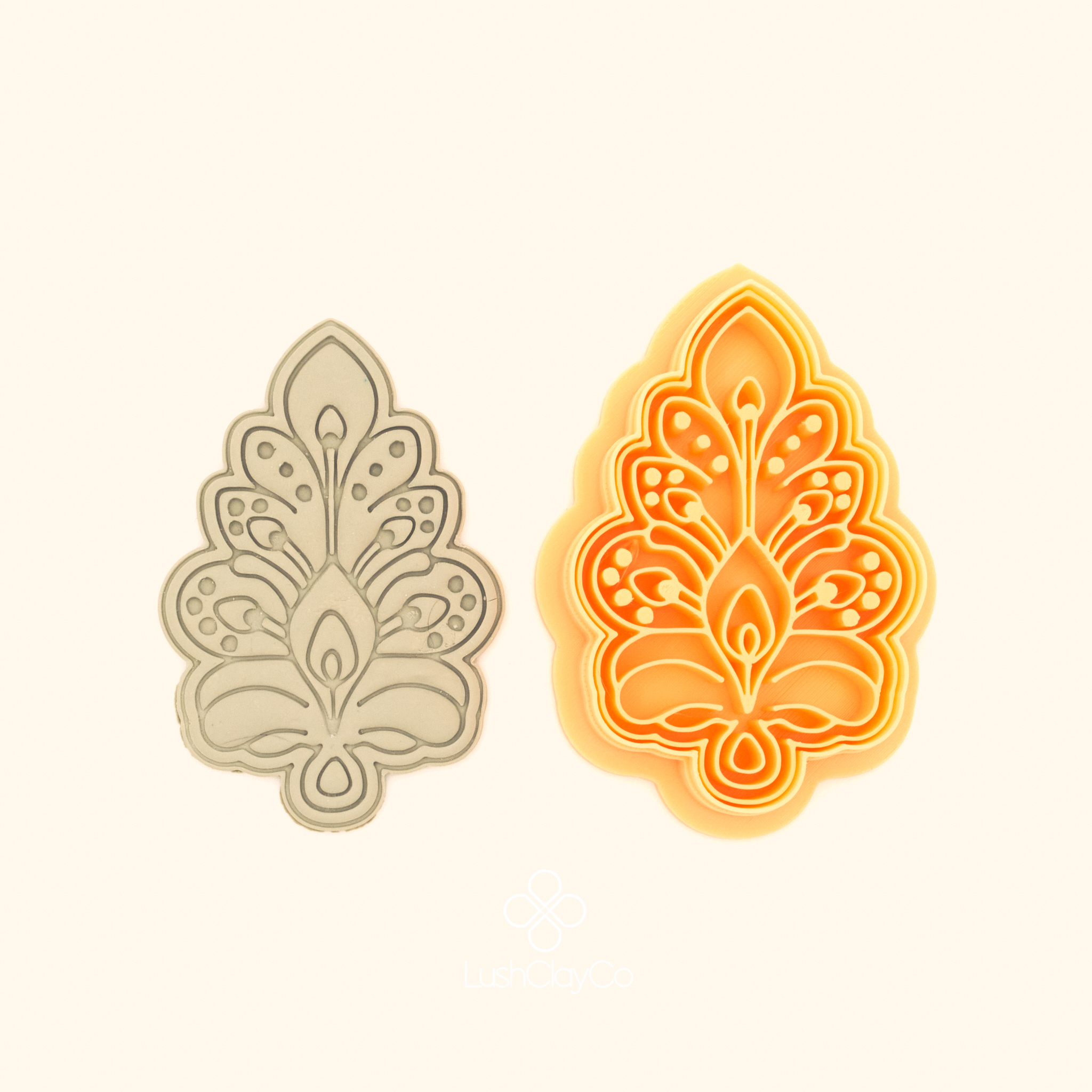
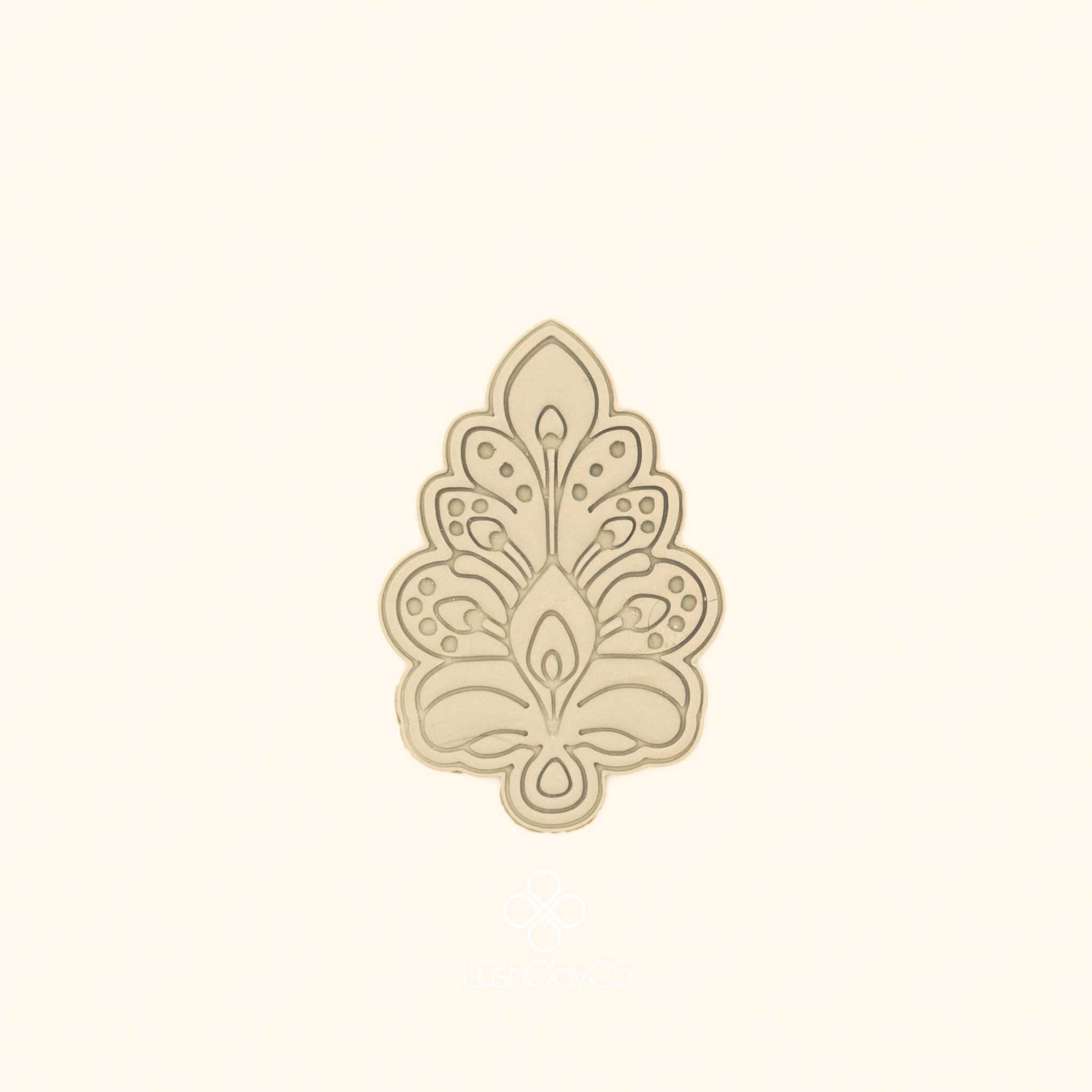
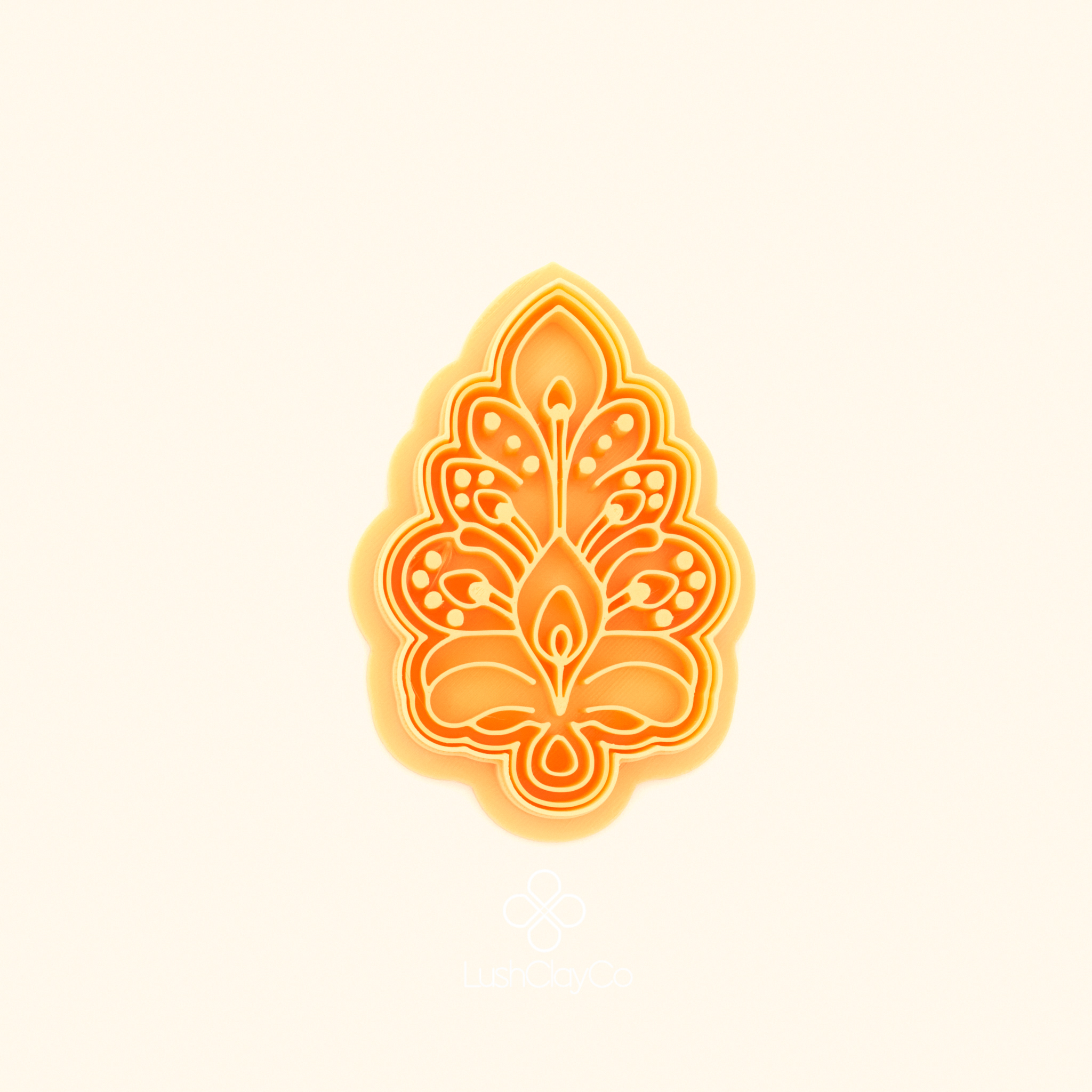
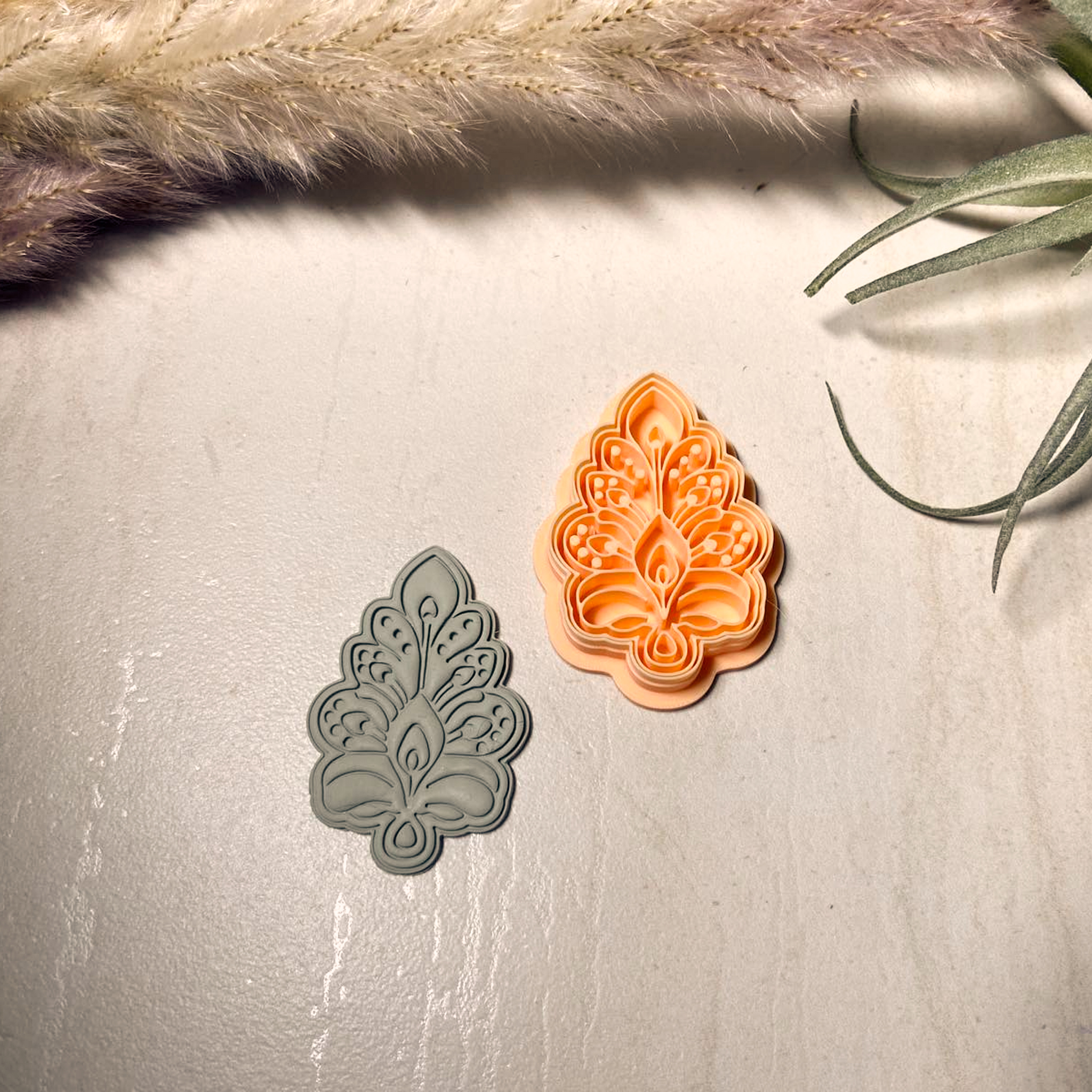
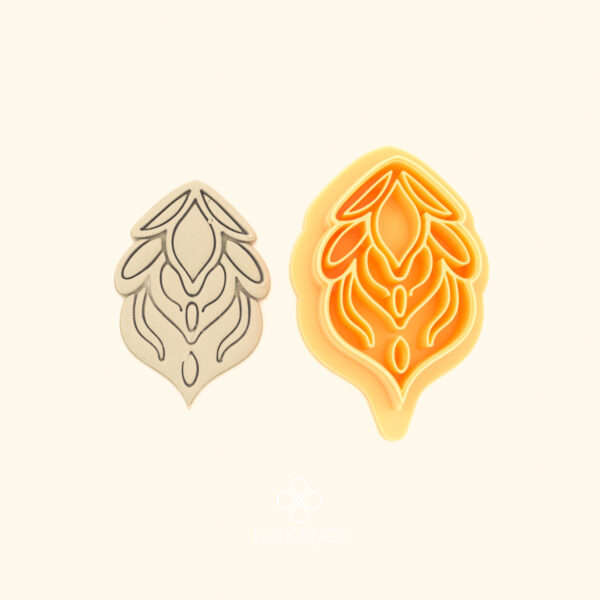
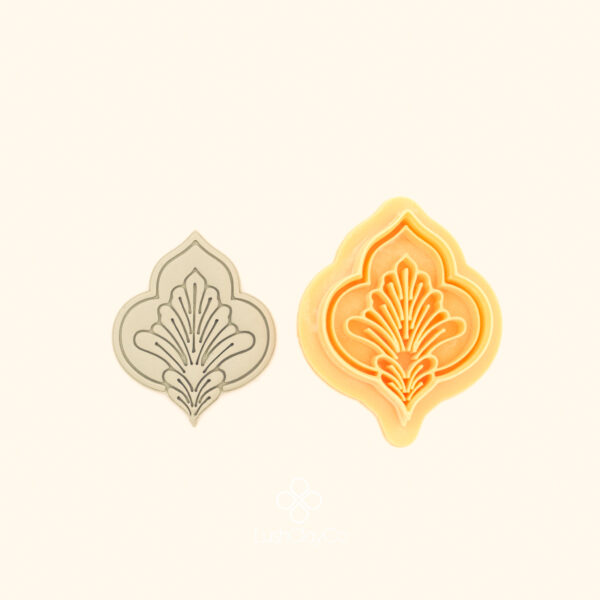
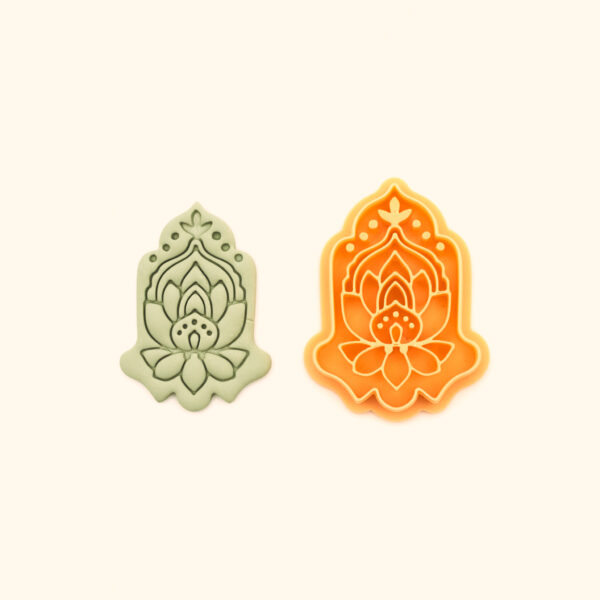
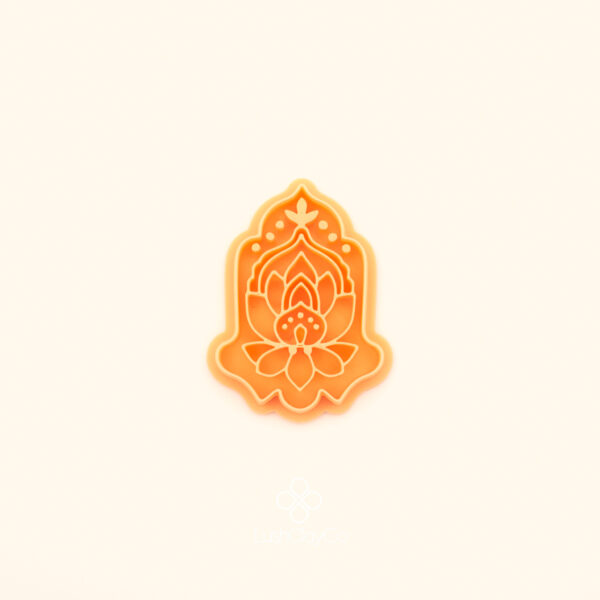
Hatayi Sorguç polymer clay cutter shaping a plume-like teardrop medallion, a palmet fan of layered petals with dotted stamen-stems and a central flame drop.
All sizes listed for polymer clay cutters are approximate and given in millimetres. Minor variation is normal and part of the handcrafted nature of 3D printed cutters.
Rinse your cutter with warm water after use and allow to air dry completely before storing. Avoid acetone, harsh solvents, or prolonged heat exposure as these can affect the material over time. Store flat or upright in a dry place away from direct sunlight.
Hatayi Sorguç polymer clay cutter draws a plume-like teardrop medallion, a fan of layered petals rising up the centre with fine dotted stamens spraying out to the sides and a single flame drop at the base. It cuts and embosses in one press, laying outline and inner detail down together.
The layered petals and budded stamens are the hatayi of Ottoman illumination, its upward fan a palmet, and sorguç, the plume, names the jewelled aigrette that crowned Ottoman turbans, gathering leaf, flower and feather into one rising crest.
Press it into pendants, earrings or decorative tiles wherever a tall, ornate motif suits the design. Pair it with Beş Penç for a coordinating set, and each Hatayi Sorguç polymer clay cutter gives a clean, defined impression that holds its fine detail through baking.
Reviews
There are no reviews yet.
Be the first to review “Hatayi Sorguç” Cancel reply

Reviews
There are no reviews yet.