Finding the best pasta machine for polymer clay is one of those decisions that seems minor until you are halfway through conditioning your third block of Fimo Professional by hand and your wrists start to disagree. A good clay conditioning machine changes your workflow completely. It conditions faster, rolls more consistent slabs, and makes Skinner blends and colour mixing genuinely enjoyable rather than a workout.
This guide compares the most popular options across every budget, from entry level machines to fully motorised setups, so you can find the best pasta machine for polymer clay at the right price point for how you work.
Table of Contents
Why a Pasta Machine Makes Such a Difference
Hand conditioning is perfectly adequate, especially for small batches of earring-sized pieces. But the best pasta machine for polymer clay does several things hands simply cannot match. It conditions clay faster and more evenly, rolling out all the stiffness in a fraction of the time. It produces consistent slab thickness at the turn of a dial, which matters enormously for cut quality. And it makes colour blending and Skinner blends accessible to beginners who would otherwise find the technique too time-consuming to attempt.
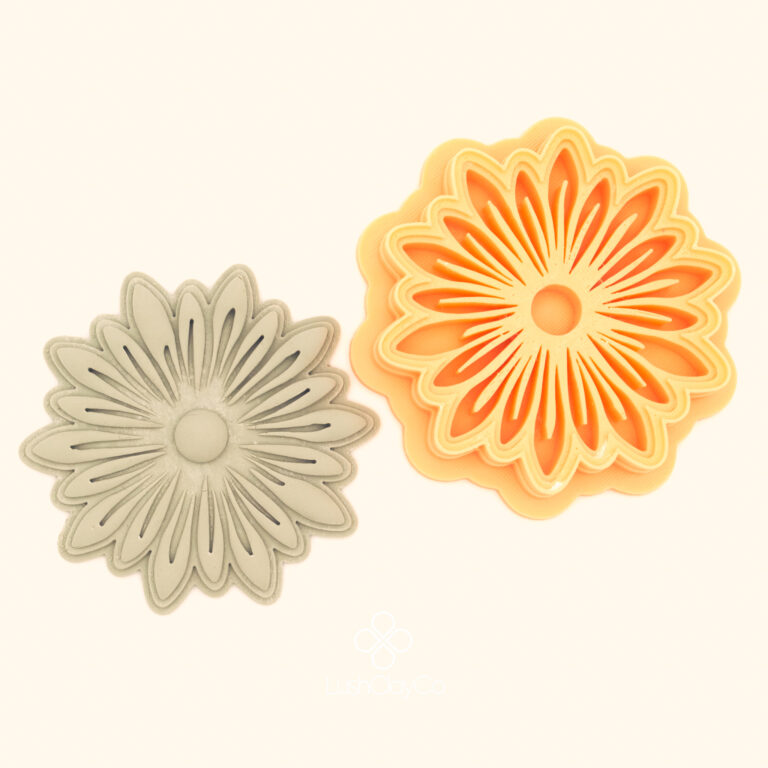
If you are cutting pieces with intricate designs, consistent thickness is directly connected to cut quality. Clay that is rolled unevenly by hand produces cuts that are slightly different depths across the piece. A pasta machine eliminates this entirely. When you pair a good machine with sharp, precision cutters like the Çarkı Madalyon, the difference in finished piece quality is immediately visible.
What to Look for in the Best Pasta Machine for Polymer Clay
Not all pasta machines work equally well with clay. Several factors separate a machine that will frustrate you from one you will reach for every session.
Roller width determines how wide a slab you can roll in a single pass. Standard machines are 150mm wide which suits most earring and charm work. Wider machines at 180mm or more are useful if you work with larger pieces or make multiple cuts from a single slab.
Thickness settings should give you a good range from thick conditioning passes down to very thin sheets for specific techniques. Most quality machines offer 7 to 10 settings. For earring making you will typically work in the middle settings, around 2 to 3mm.
Roller material matters for clay specifically. Older steel rollers can leave dark streaks on light and translucent clays. Anodised aluminium rollers are significantly better for clay work and are worth seeking out.
Blade design affects how easy the machine is to clean between colour changes. Removable or easily accessible blades are a genuine practical advantage over machines where clay debris accumulates in inaccessible areas.
Motor compatibility is worth considering even if you do not buy a motor immediately. Some machines accept aftermarket motors, which is a useful upgrade path as your volume increases.
The Best Pasta Machine for Polymer Clay at Every Price Point
Keoker Clay Machine
Atlas 150 Manual
Atlas 180 Wide
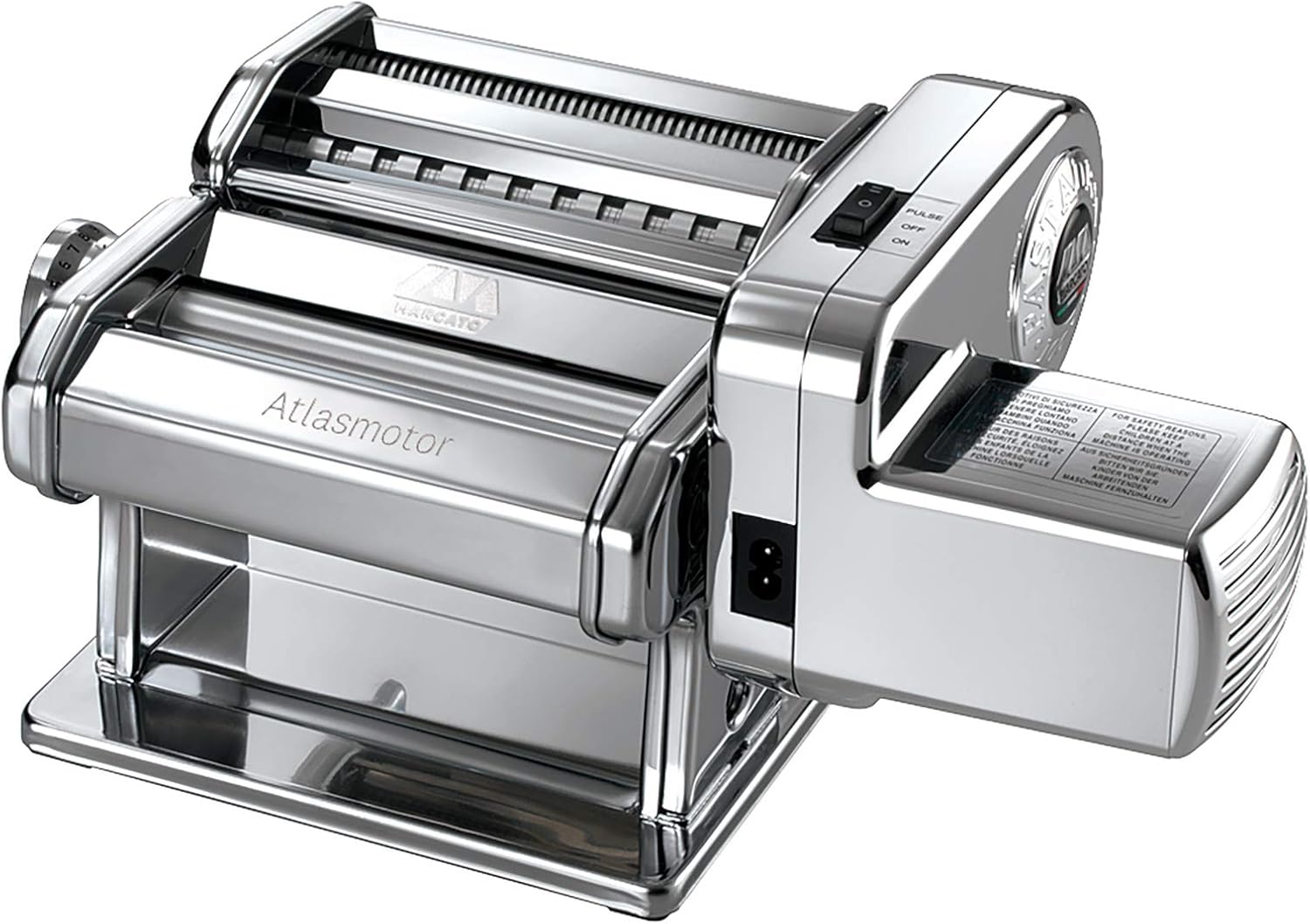
Atlas 150 with Motor
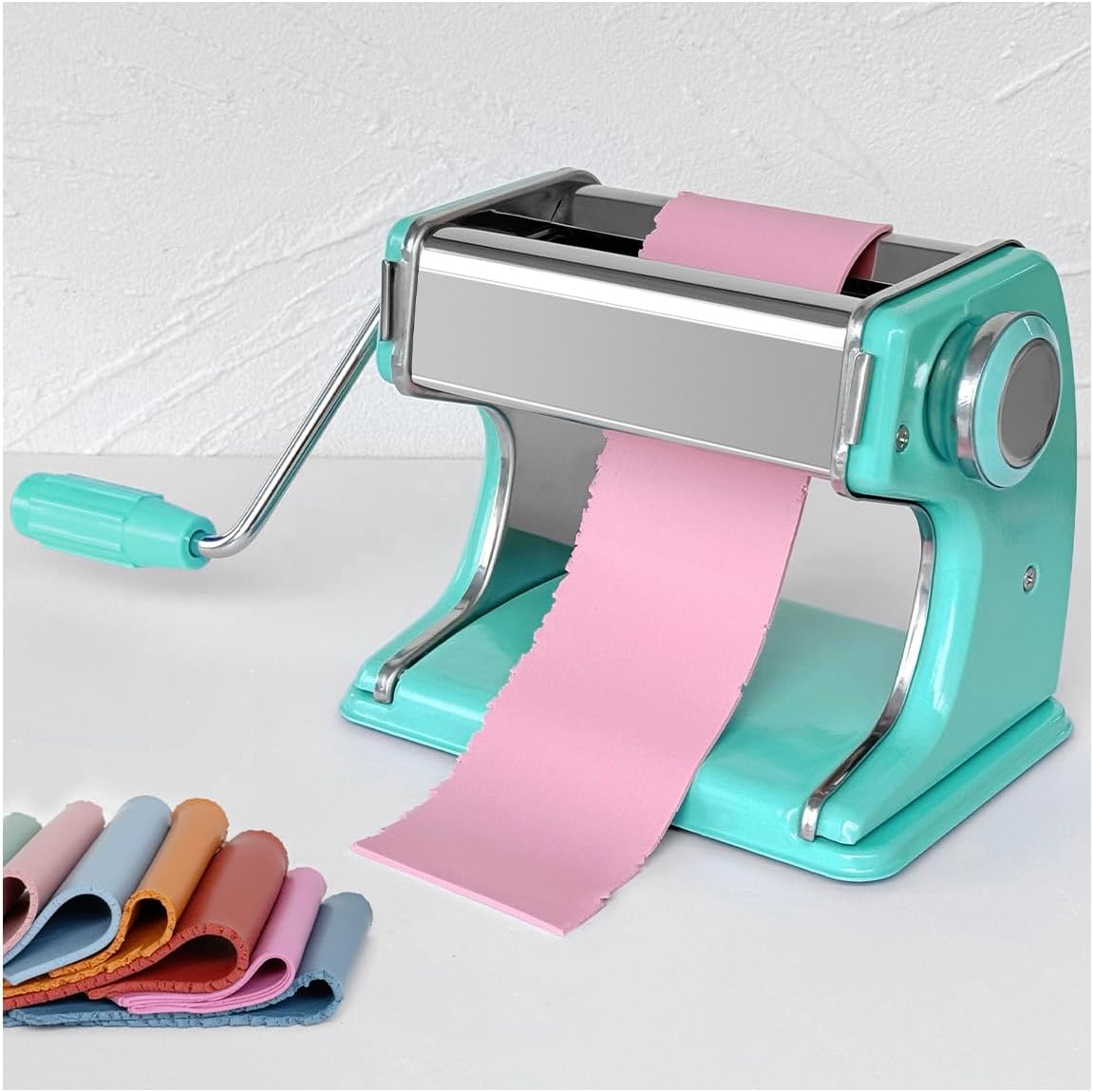
Budget Option: Keoker Polymer Clay Conditioning Machine
The Keoker is the best pasta machine for polymer clay at the entry level price point specifically because it is designed for clay rather than pasta. Unlike repurposed kitchen pasta machines, the Keoker is marketed and sized for craft use, which means the thickness settings are more relevant to clay thicknesses and the machine does not come with unnecessary pasta cutting attachments.
It handles conditioning and basic slab rolling well for beginners making earrings and small pieces. It is not as robust as the Atlas and will show wear faster under heavy daily use, but for someone starting out or working in lower volumes it is a practical and affordable way to get those benefits without the higher investment.
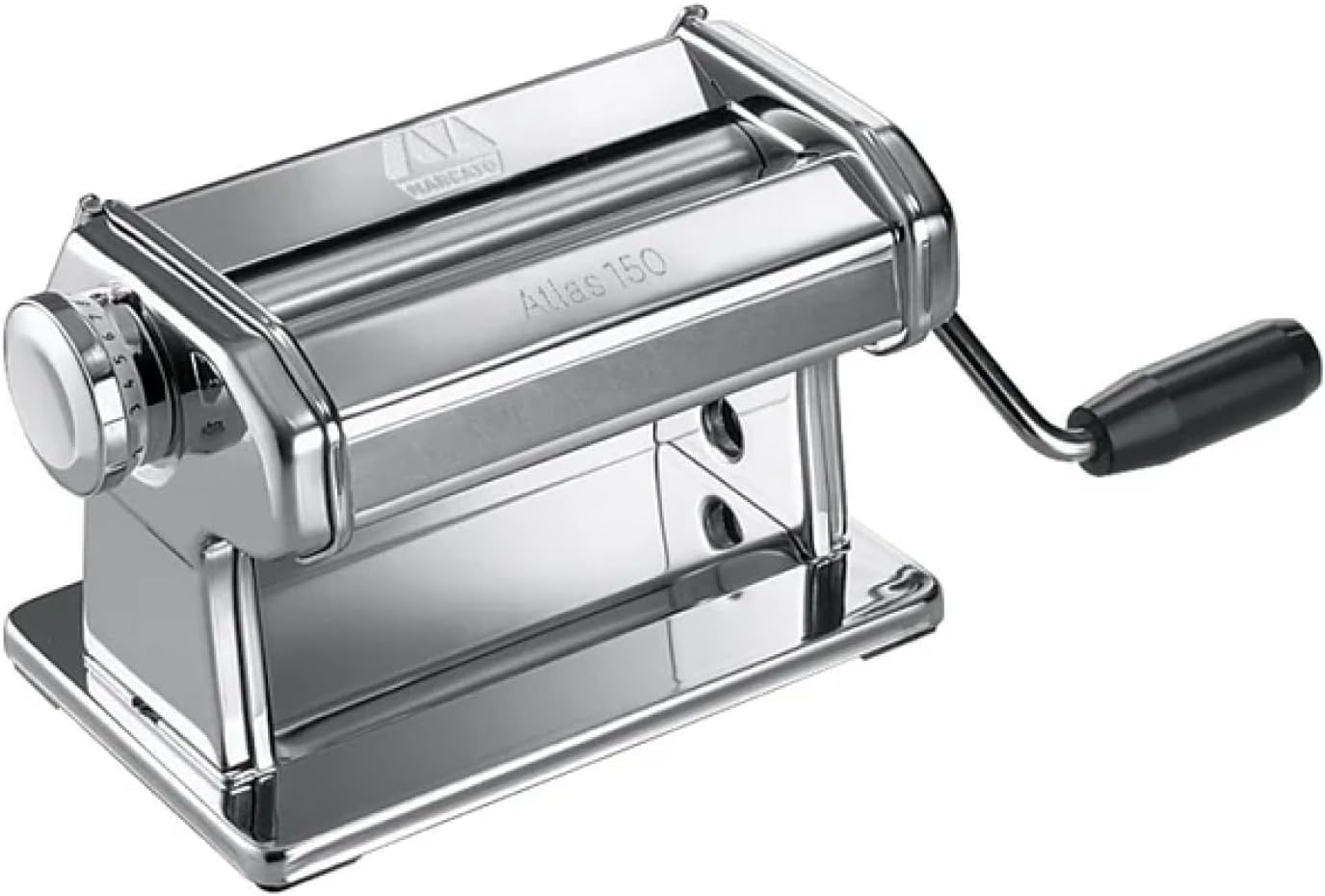
Mid Range: Atlas 150 Manual
The Atlas 150 is the most recommended pasta machine for polymer clay across the maker community and has been for decades. It is made by Italian manufacturer Marcato, built from quality chrome steel, and has 10 thickness settings covering a good range from thick conditioning passes down to very thin sheets.
The current Wellness model has anodised aluminium rollers which eliminates the dark streaking problem that affected earlier steel roller versions. It is sturdy, runs smoothly, and handles the stiffness of polymer clay considerably better than cheaper machines whose gears were designed for soft pasta dough rather than a material that takes significantly more force to condition.
At 150mm width it suits most earring and jewelry making work comfortably. The Atlas clamps to the table edge for stability and the crank handle is well designed for extended use. This is the machine most experienced makers have on their bench and for good reason. It is a reliable workhorse that earns the title of best pasta machine for polymer clay for most users.
Wide Format: Atlas 180
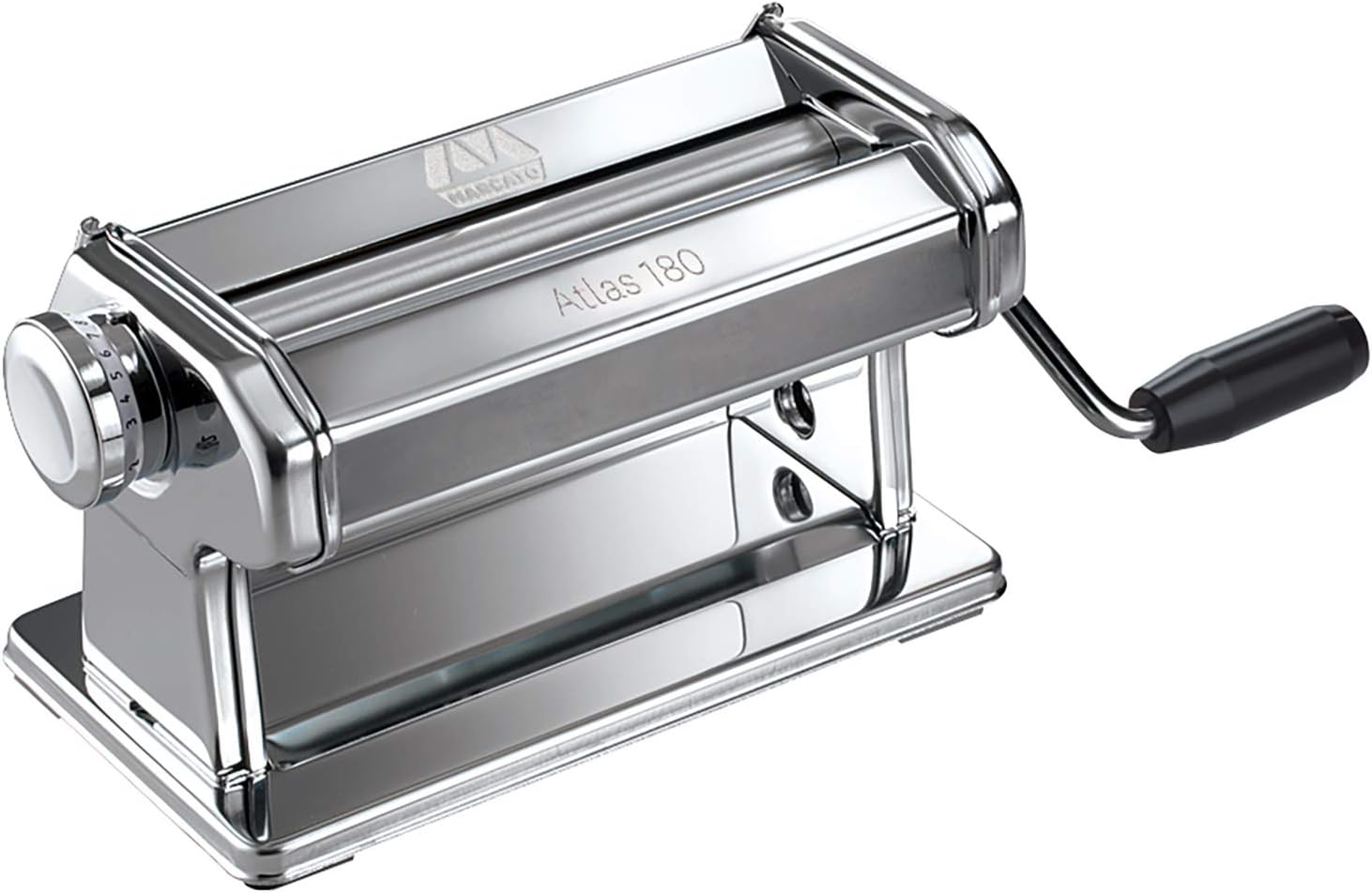
The Atlas 180 is the wider version of the Atlas 150, giving you a 180mm roller width for larger slabs. If you regularly make larger pieces, work with wide canes, or want to condition larger batches in fewer passes, the extra width is genuinely useful.
The trade-off is that the 180 has received more mixed reviews than the 150 in terms of build consistency. Some users report the gears are slightly lighter gauge than the 150 which can lead to issues under heavy use. For moderate use on clay work it performs well, but if you are choosing between the two for general earring and charm making, the 150 is the safer recommendation. The 180 earns its place when slab width is a genuine working requirement.
Premium Option: Atlas 150 with Motor
The Atlas 150 with motor is the best pasta machine for polymer clay for anyone working in significant volume. Adding a motor to the Atlas removes the need to crank by hand which frees both hands to guide the clay and catch the sheet as it exits the rollers. For Skinner blends which require many repeated passes through the machine, this is a significant quality of life improvement.
The motor attaches to the handle hole and is secured by pins that slot into the holes on either side of the crank opening. It runs quietly and at a consistent speed that is well suited to clay conditioning. For makers running a small business, teaching workshops, or conditioning large batches regularly, the motorised Atlas is worth the additional investment and genuinely transforms the conditioning experience.
Do You Need a Motor from the Start
For most beginners the answer is no. Start with the manual Atlas 150 or the Keoker depending on your budget, learn the workflow, and add a motor when you find yourself conditioning enough volume that cranking becomes the bottleneck. The motor is a worthwhile upgrade but not a day one necessity for most earring makers.
Caring for Your Machine
Even the best machine stays the best only with basic maintenance. Wipe the rollers clean between colour changes using a scrap piece of conditioned white or translucent clay run through the machine. This picks up residual colour from the rollers without requiring disassembly.
Never wash pasta machines with water. The internal mechanisms are not sealed and water causes rust and corrosion quickly. A dry brush or cloth for the exterior and clay scraps for the rollers is all the cleaning you should need.
Store the machine away from direct sunlight and heat to protect the rollers and any plastic components. If the machine feels stiff or the rollers are hard to turn, a very small amount of food-grade mineral oil applied sparingly to the axle points can help, but most modern machines should not need this under normal use.
Which Machine Is Right for You
For beginners and low to moderate volume makers, the Atlas 150 is the clear recommendation as the best pasta machine for polymer clay. It is durable, produces consistent results, and has the community backing of decades of use in clay studios.
For budget-conscious beginners, the Keoker is a solid starting point that gets the job done without the Atlas price tag.
For high volume makers or anyone who conditions clay daily, the Atlas 150 with motor is worth the investment. The time and physical effort saved across a working week adds up quickly.
For makers working with larger pieces or wider slabs, the Atlas 180 fills that specific need, though the 150 remains the stronger all-round recommendation.
Whatever machine you choose, pairing it with sharp, well-designed cutters makes the whole workflow connect. Browse the full range of polymer clay cutters that pair beautifully with consistent, machine-rolled slabs.