One of the most common questions beginners ask is how to seal polymer clay and whether it is even necessary. The short answer is that polymer clay does not always need sealing, but when you do seal it, choosing the right product makes the difference between a professional finish and a sticky, peeling disaster.
This guide covers when to seal polymer clay, when to skip it, and which products actually work for jewelry makers specifically. Knowing how to seal polymer clay correctly will save you from ruined pieces and wasted product.
Table of Contents
Do You Actually Need to Seal Polymer Clay
Understanding how to seal polymer clay starts with knowing when it is necessary in the first place. Baked polymer clay is already a durable, water-resistant plastic. It does not absorb moisture, it does not rust, and it does not degrade quickly under normal wearing conditions. For many finished pieces, no sealing is required at all.
However there are specific situations where knowing how to seal polymer clay becomes important. If you have applied surface treatments like pan pastels, mica powders, or acrylic paint to your piece, those surface additions need to be sealed to protect them from scratching and wear. If you want to change the finish level of your piece, adding gloss to a matte clay or adding matte to a shiny one, a sealant is the tool for that. And if you want an extra layer of protection on pieces that will see heavy wear, sealing adds durability.
For plain baked clay with no surface additions, the clay itself is often the most durable thing on the piece. Many sealers actually degrade before the clay does.
What to Avoid When Sealing Polymer Clay
Before covering what works, it is worth being clear about what does not. The most common sealing mistake beginners make is reaching for whatever varnish is available, often a generic craft store product or nail polish.
Nail polish is not suitable for sealing polymer clay. It contains solvents that interact with the plasticisers in polymer clay and cause the surface to become permanently sticky over time. This stickiness cannot be reversed.
Many generic acrylic craft varnishes also cause problems. They can remain tacky, cloud over, or peel away from the clay surface. This is particularly common on flexible clays where the sealant cannot flex with the piece.
The safest approach is to use products that are specifically tested and recommended for polymer clay use.
UV Resin
UV resin is one of the most popular ways to seal polymer clay for jewelry makers who want a high-gloss, glass-like finish. It produces an extremely durable surface that is resistant to scratching and wear and gives finished pieces a professional, polished look.
To use UV resin you apply a thin, even layer to the surface of your baked piece and cure it under a UV nail lamp for the time specified by your resin brand, usually 60 to 120 seconds. The result is a hard, clear coating that bonds well to polymer clay.
The main considerations with UV resin are ventilation and application technique. Uncured resin should be handled with care and in a well-ventilated space. An air purifier is a worthwhile investment if you work with resin regularly. Apply in thin layers rather than one thick coat to avoid bubbling and uneven curing at the edges.
UV resin is best suited to flat or gently curved surfaces. On pieces with deep texture or recessed areas, resin can pool and create uneven thickness.
Resin Alternatives
If you prefer to avoid traditional UV resin, resin alternatives have improved significantly and are worth considering for sealing polymer clay. These products are designed to behave like resin but with reduced fume and toxicity concerns. They still require a UV lamp to cure and produce a similar high-gloss finish.
Vallejo Polyurethane Varnish
Vallejo polyurethane varnish is one of the most trusted products for sealing polymer clay among experienced makers. It is a water-based polyurethane that dries to a flexible, durable finish that moves with the clay rather than cracking or peeling away.
It is available in gloss, satin, and matte finishes which gives you full control over the final appearance of your piece. Apply with a soft brush in thin coats and allow each coat to dry fully before adding the next. Two thin coats give better results than one thick coat.
Vallejo varnish does not go sticky, does not cloud, and works well on both flat and textured surfaces. It is the recommended product for sealing polymer clay on pieces where flexibility and long-term durability are the priority.
Craftique Grand Finale
Craftique Grand Finale is another product well regarded in the polymer clay community for sealing and finishing. It produces a smooth, professional finish and works reliably on baked clay. It is harder to find than Vallejo but worth seeking out if you prefer a brush-on product with a slightly different finish quality. No affiliate link is available for this product but it is worth searching for directly.
Pan Pastels as a Surface Treatment
Pan pastels are not technically a sealant but they deserve mention in any guide on how to seal polymer clay because they are applied before baking as a surface treatment and then sealed over. Dusted onto raw clay before baking, pan pastels add colour gradients, shading, and depth that baking sets into the surface. Once baked, the pan pastel layer needs to be sealed to protect it from rubbing off.
Any of the sealants above work over pan pastels. Vallejo varnish is particularly effective because it does not disturb the pastel layer during application.
Buffing as a No-Product Finish
For makers who prefer not to apply any product at all, buffing is worth knowing about as part of understanding how to seal polymer clay without chemicals. After baking and cooling, rubbing the clay surface firmly with a scrap of dry denim brings up a natural sheen that resembles a soft gloss. It does not add protection but it does improve the appearance of plain baked pieces and is completely product-free.
This works best on smooth, plain-coloured clay. Textured or multi-coloured surfaces benefit less from buffing.
How to Apply Sealant Properly
Whatever product you choose, application technique matters as much as product choice.
Always ensure your piece is fully baked and completely cooled before applying any sealant. Applying sealant to warm clay can cause adhesion issues.
Use a soft, clean brush and apply in thin, even strokes. Work in one direction rather than back and forth to avoid streaking. Allow each coat to dry or cure fully before assessing whether a second coat is needed.
For UV resin, ensure all surfaces are covered evenly before curing. Any uncured resin left on the surface will remain tacky permanently.
Store your sealants properly between uses. Brush-on varnishes should be sealed tightly to prevent skinning. UV resin should be stored away from light to prevent premature curing.
Connecting Finish Quality to Cut Quality
The finish you choose is the last step in a process that starts with the cut. A clean, precise cut from a well-made cutter gives you a smooth edge that takes sealant evenly and looks polished under any finish. A rough or torn edge shows under sealant, particularly under high-gloss UV resin which amplifies surface imperfections.
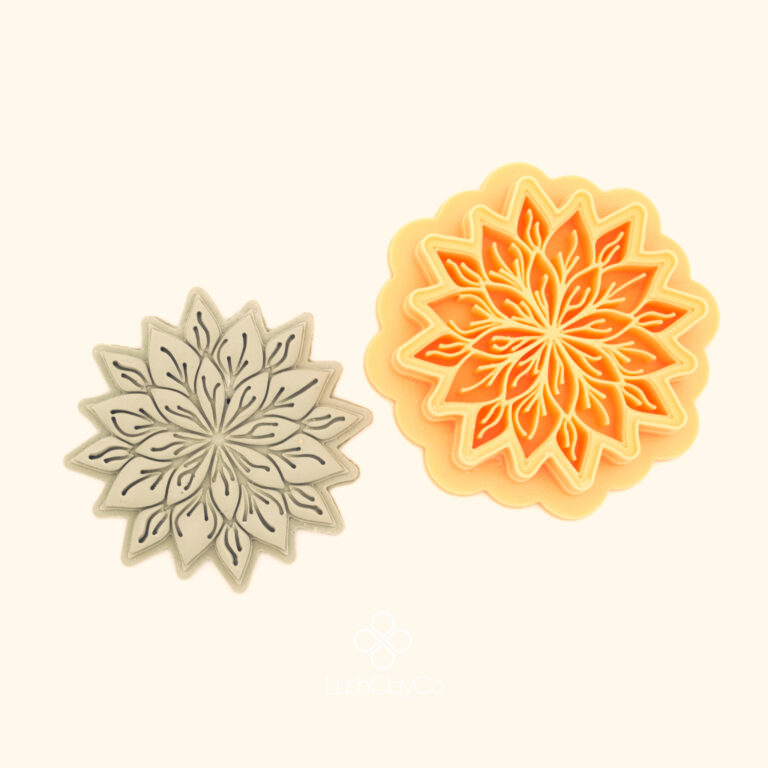
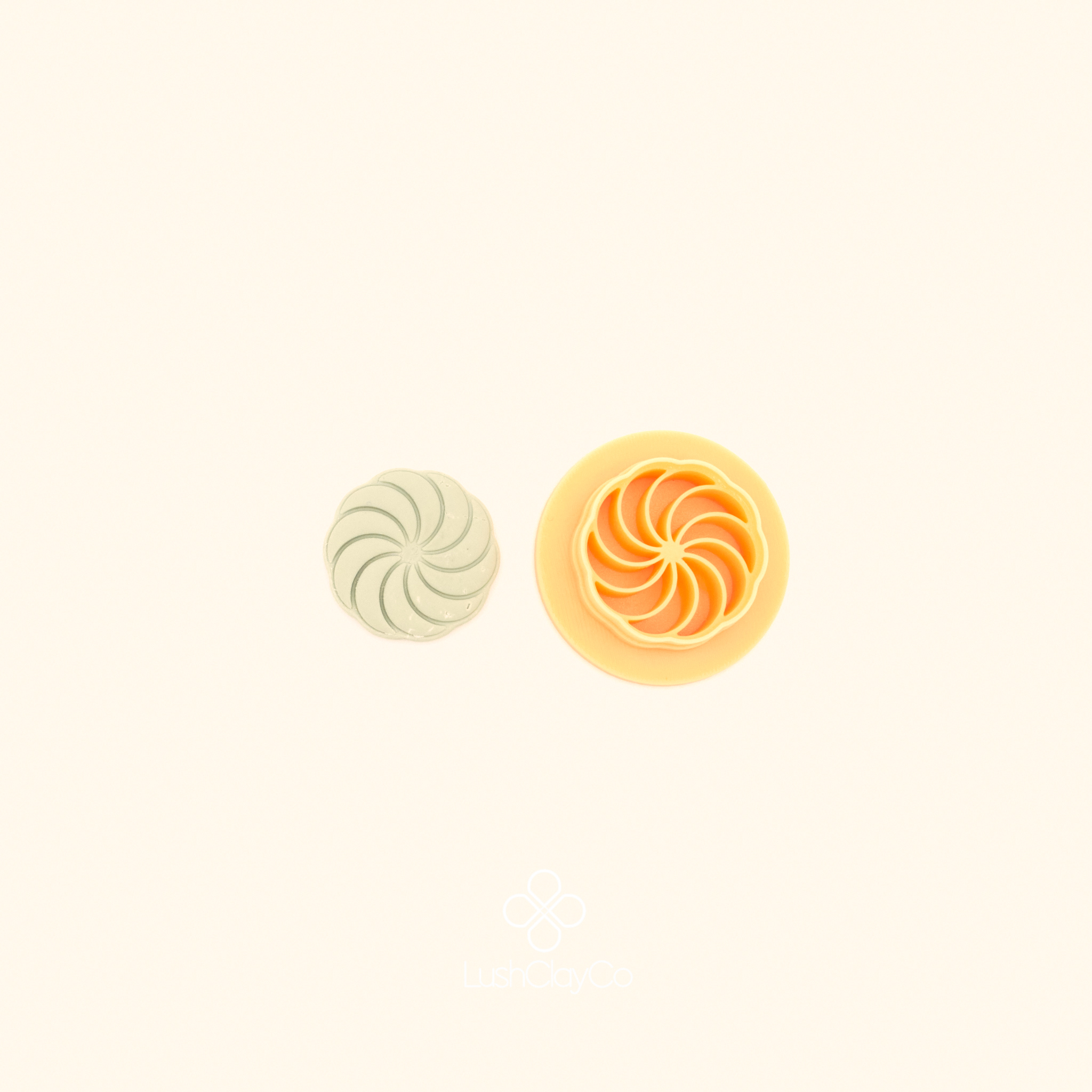
The Çarkıfelek is a good example of a design where edge quality directly affects how the finished sealed piece looks. The geometric precision of the design means any imperfection in the cut edge is immediately visible under a gloss finish. Starting with a clean cut makes every finish choice work better. Browse the full range of polymer clay cutters that are tested specifically for clean edge release.
A Quick Reference for How to Seal Polymer Clay
- Plain baked clay with no surface additions: sealing optional
- Pan pastels or mica powder on the surface: seal required
- Acrylic paint on the surface: seal recommended
- Want a gloss finish: UV resin or Vallejo gloss varnish
- Want a matte finish: Vallejo matte varnish
- Want flexibility and durability: Vallejo polyurethane varnish
- Want no product at all: buff with dry denim for a natural sheen
- Never use: nail polish, generic craft varnish, untested products