One of the most common questions beginners ask is how long to bake polymer clay and at what temperature. Knowing how long to bake polymer clay correctly is essential, get it wrong and your pieces either snap straight out of the oven or come out scorched and discoloured. Get it right and your clay cures strong, flexible, and ready to wear.
This guide covers baking times and temperatures for the most popular polymer clay brands, explains what the manufacturer guidelines actually mean in practice, and walks through the most common baking problems and how to fix them.
Table of Contents
Why Baking Time and Temperature Matter
Polymer clay does not air dry. It cures through heat, and that curing process needs to reach all the way through the thickest part of your piece to be complete. Under-baked clay feels firm when it comes out of the oven but becomes brittle over time and snaps easily, which is one of the most frustrating things to discover after you have spent time finishing and assembling a piece.
Over-baked clay at the correct temperature is actually not a problem. Longer baking increases strength. The only risk with longer baking is subtle colour shift on white, translucent, and light-coloured clays, which is why those need special attention covered below.
The bigger risk for most beginners is an inaccurate oven. Most home ovens run 10 to 20 degrees hotter or cooler than the dial indicates. A standalone oven thermometer is one of the most important tools a clay maker can own. It costs very little and removes all the guesswork from polymer clay baking temperature.
How Long to Bake Polymer Clay: Understanding Manufacturer Guidelines
Most polymer clay brands list their baking time as minutes per 6mm (quarter inch) of thickness. This means the thickest part of your piece determines how long it needs in the oven, not the overall size.
For jewelry pieces like earrings and charms, which are typically 2 to 3mm thick, this rule rarely comes into play. Your pieces are thin enough that the minimum bake time for each brand is almost always sufficient. However, when considering how long to bake polymer clay, a full hour at the correct temperature is the standard most experienced makers follow regardless of thickness, because longer baking produces stronger, more durable results.
Polymer Clay Baking Temperature and Time Chart
The following table uses manufacturer specifications as the baseline. Both Fahrenheit and Celsius are included since clay brands often vary between American and European standards.
| Brand | Temperature | Minimum Time (2-3mm jewelry piece) | Time per 6mm thickness | Notes |
|---|---|---|---|---|
| Premo Sculpey | 275F / 130C | 30 mins | 30 mins per 6mm | Strong, flexible after baking. Recommended for jewelry. |
| Sculpey III | 275F / 135C | 15 mins | 15 mins per 6mm | More brittle than Premo after baking. |
| Sculpey Souffle | 275F / 130C | 30 mins | 30 mins per 6mm | Lightweight, strong. Good for earrings. |
| Fimo Soft | 230F / 110C | 30 mins | 30 mins per 6mm | Lower temperature, less risk of scorching. |
| Fimo Professional | 230F / 110C | 30 mins | 30 mins per 6mm | Firmer, holds fine detail well. |
| Cernit | 230F / 110C | 30 mins | 30 mins per 6mm | Smooth finish, porcelain-like appearance. |
Recommended bake time for jewelry: Regardless of brand minimums, most experienced makers bake jewelry pieces for a full hour at the correct temperature. This produces stronger results and does not harm the clay provided the temperature is accurate.
White, Translucent, and Light Coloured Clays
These clays need extra care during baking because they are vulnerable to colour shift and surface scorching even at correct temperatures. Radiant heat from oven elements causes yellowing and browning on light surfaces, which is irreversible.
| Clay Type | Extra Precaution | Notes |
|---|---|---|
| White | Always tent with aluminium foil | Even slight scorching shows clearly |
| Translucent | Always tent with aluminium foil, keep strictly to the manufacturer temperature and do not exceed it | Yellowing is permanent |
| Light pastels | Tent recommended | Monitor carefully on first bake |
| Pearl and metallic | Tent recommended | Heat can dull the metallic finish |
To tent your pieces, loosely cover the baking tray with a sheet of aluminium foil before placing it in the oven. The foil shields the surface from direct radiant heat while still allowing the air temperature to cure the clay evenly.
Setting Up Your Baking Environment
Before you bake anything, run your oven thermometer through a full heat cycle and note where your oven actually sits compared to your dial setting. Adjust your dial up or down accordingly and mark it if needed.
Bake on an unglazed ceramic tile or glass rather than directly on a metal tray. Tile distributes heat more evenly and gives the underside of your pieces a cleaner, more consistent finish. If you notice shiny spots on the underside of your pieces, the metal tray is the cause.
Always preheat your oven fully before putting clay in. Placing clay in a cold oven that is still climbing to temperature exposes it to uneven heat and affects how evenly the clay bakes.
Common Baking Problems and How to Fix Them
These are the most common polymer clay baking problems beginners face and how to fix them.
Clay snaps or breaks after baking.
This is the most common result of not knowing how long to bake polymer clay correctly. Either the temperature was too low, the bake time was too short, or the oven was not fully preheated. Re-baking can sometimes improve strength on pieces that are not yet fully cured. Bake at the correct temperature for a further 20 to 30 minutes and allow to cool completely before testing.
Colour has darkened or gone brown.
The oven temperature is too high or the piece was too close to the heating element. Run your thermometer again and check for temperature spikes. Tent your pieces on the next bake. Scorched clay cannot be reversed. Getting the bake right means temperature accuracy first, time second.
Surface has a rough or bumpy texture after baking.
Usually caused by dust or debris on the clay surface before baking. Wipe each piece with a barely damp baby wipe before it goes in the oven and allow it to dry completely before baking. Also check that your work surface and hands are clean before handling raw clay.
Piece has warped or slumped.
The oven rack is not level, or the piece was moved before it had fully cooled. Always allow pieces to cool completely on the tile or tray before handling. Use a spirit level to check your oven rack.
Translucent clay has yellowed.
Direct radiant heat is the cause. Always tent translucent pieces and bake at the lower end of the recommended temperature range. This is one problem that cannot be fixed after baking.
Piece feels flexible or bendy after cooling.
Polymer clay is slightly flexible when warm and firms up as it cools. If a piece is still bendy after cooling completely it is under-baked. Return it to the oven for additional time at the correct temperature.
After the Bake
Once you know how long to bake polymer clay and your timer goes off, allow pieces to cool completely on the tile before handling. Polymer clay is at its most fragile while still warm and can warp or dent if moved too early.
Once cooled, clean your pieces with a cotton swab dipped in 100% acetone to remove any fingerprints or surface marks before finishing. This is the final step after the bake. If you are adding a varnish or resin finish, ensure the clay is fully cooled and cleaned first for the best adhesion.
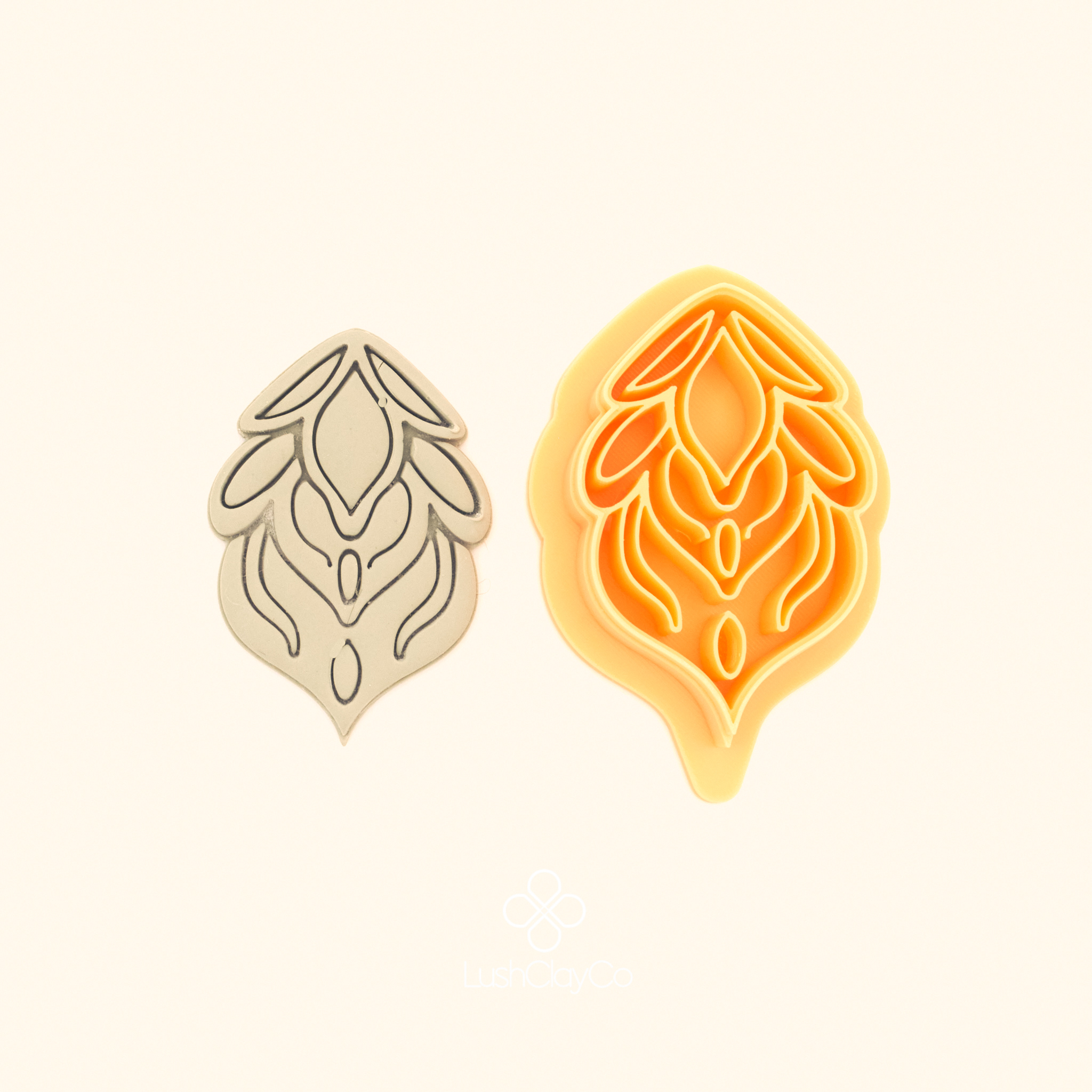
Understanding how long to bake polymer clay for thin jewelry pieces comes down to one thing: a consistent hour-long bake at the correct temperature. The pieces you cut with your Alev Penç and other cutters from the LushClayCo collection are typically 2 to 3mm thick, which puts them well within the minimum bake time for every brand in the table above. That steady hour at the right temperature gives you strong, durable pieces every time.
Quick Baking Checklist
Before every bake, use this checklist to make sure your polymer clay baking temperature and time are dialled in:
- Oven thermometer is in place and temperature is verified
- Oven is fully preheated before clay goes in
- Rack is level
- Pieces are on an unglazed tile or glass, not directly on metal
- White, translucent, and light coloured pieces are tented with aluminium foil
- Pieces are clean and dust free
- Timer is set for a minimum of 30 minutes, ideally one hour for jewelry
- Pieces are left to cool completely on the tile before handling