Choosing the right polymer clay finishes for your jewelry is one of those decisions that makes a real difference to the final result. The wrong product can leave your piece sticky, cloudy, or peeling within weeks. The right polymer clay finish protects your work, elevates the appearance, and lasts through regular wear without issue.
This guide covers every major polymer clay finish option available to jewelry makers, compares them honestly, and tells you exactly which situations each one suits best. Not every piece needs a polymer clay finish at all, and knowing when to skip one entirely is just as important as knowing which product to reach for.
Table of Contents
Do You Always Need a Polymer Clay Finish
No. Baked polymer clay is already a durable, water-resistant plastic. For plain baked pieces with no surface additions, the clay itself is often the most durable layer on the piece. Many sealers and varnishes actually degrade before the clay does, which means adding a polymer clay finish can sometimes shorten the lifespan of a piece rather than extending it.
You need a polymer clay finish when you have applied surface treatments like pan pastels, mica powders, or acrylic paint that need protecting. You want a polymer clay finish when you need to change the sheen level, adding gloss to a matte clay or matte to a shiny one. And you may want one for pieces that will see heavy daily wear and would benefit from extra protection.
Polymer Clay Finishes Compared: The Full Table
| Finish | Sheen | Durability | Ease of Use | Fumes | Best For |
|---|---|---|---|---|---|
| UV Resin | High gloss | Excellent | Moderate | Yes | Statement pieces |
| Resin Alternative | High gloss | Very good | Moderate | Reduced | Lower fume concern |
| Vallejo Varnish | Gloss/Satin/Matte | Excellent | Easy | Minimal | Everyday pieces |
| Craftique Grand Finale | Satin | Very good | Easy | Minimal | Natural finish |
| Pan Pastels | Matte colour | Good with sealer | Easy | None | Surface shading |
| Buffing | Natural sheen | No added protection | Easy | None | Plain clay pieces |
UV Resin
UV resin is the most dramatic of all polymer clay finishes, producing a glass-like high-gloss surface that cures hard and clear under a UV nail lamp in 60 to 120 seconds. It bonds well to baked polymer clay and makes colours appear more saturated, giving pieces a jewellery store quality appearance.
UV resin is the right choice for statement earrings, pieces where the gloss is part of the design, and any work where maximum durability is the priority. Uncured resin produces fumes and should be used with ventilation. An air purifier is worth having if you work with resin regularly.
Apply in thin, even layers rather than one thick coat to avoid bubbling and pooling in recessed areas. UV resin works best on flat or gently curved surfaces. On highly textured pieces it can obscure detail and look uneven.
Resin Alternative
Resin alternatives are worth considering for makers who want the resin look with reduced fume concerns. They still require a UV lamp to cure and produce a similar high-gloss result, but the formulations are designed to be safer to work with. Results are very close to traditional UV resin and for most earring making purposes the difference is negligible.
Vallejo Polyurethane Varnish
Vallejo polyurethane varnish is the most consistently recommended of all polymer clay finishes among experienced makers for everyday jewelry. It is water-based, flexible when dry, and available in gloss, satin, and matte options which gives you full control over sheen level without changing products.
It applies easily with a soft brush, dries without tackiness, and does not cloud or yellow over time. Because it is flexible it moves with the clay rather than cracking or peeling, making it particularly well suited to earrings that flex during wear. Two thin coats produce better results than one thick coat.
Craftique Grand Finale
Craftique Grand Finale is a brush-on polymer clay finish that sits between varnish and resin in terms of result. It gives a smooth, slightly elevated surface with a natural satin sheen that many makers prefer for pieces where they want a finished look without the full gloss of resin. It applies cleanly, levels well, and works reliably on both smooth and lightly textured surfaces. No affiliate link is available for this product.
Pan Pastels as a Surface Treatment
Pan pastels are not a polymer clay finish in the traditional sense but they belong in any comparison because they change the appearance of a piece significantly before baking. Dusted onto raw clay with a soft applicator, they add colour gradients, shading, and depth that bake into the surface permanently.
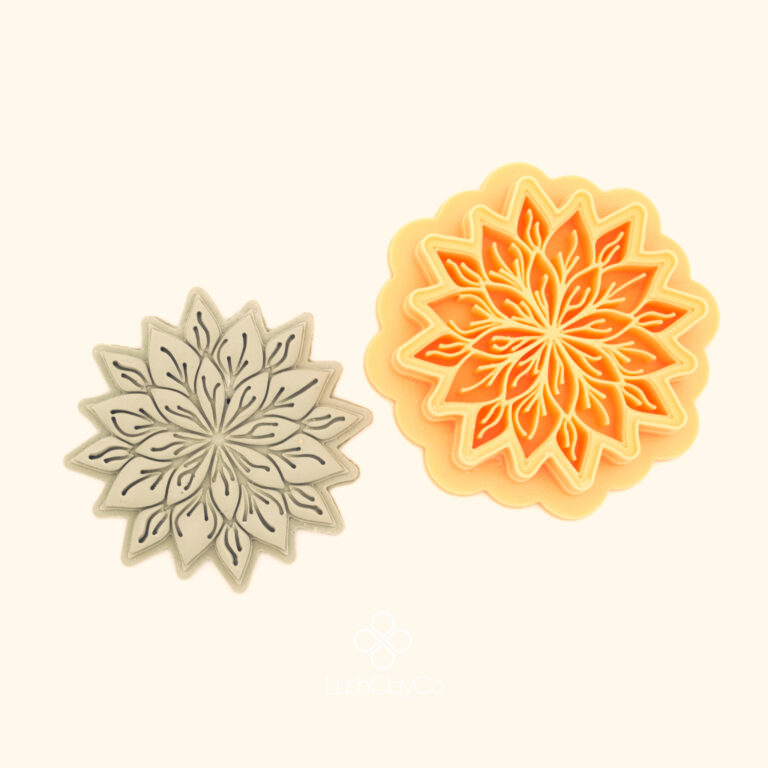
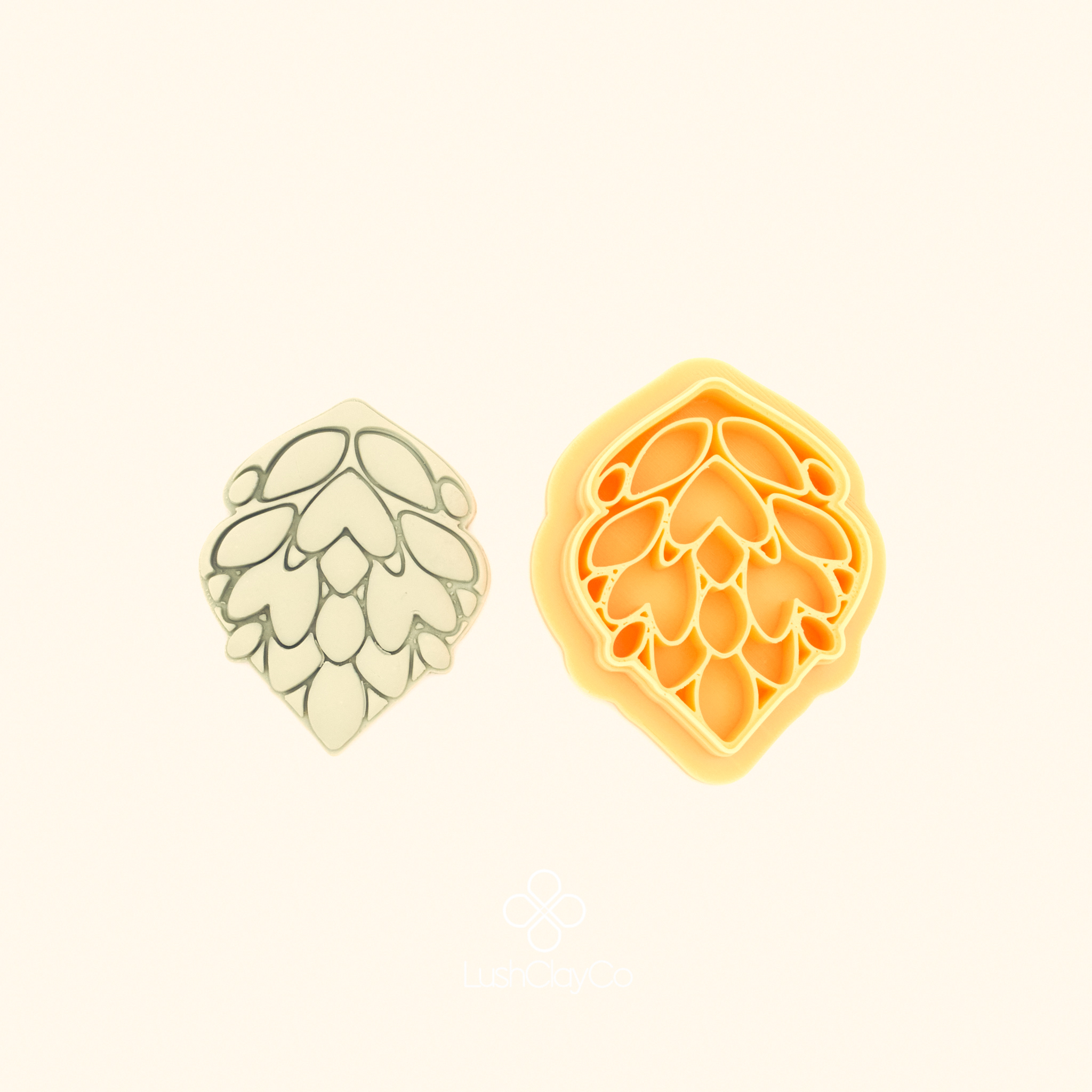
The pan pastel layer needs to be sealed with a polymer clay finish after baking to protect it from rubbing off. Vallejo varnish is the recommended topcoat. Pan pastels work particularly well on intricate cutter designs where shading between raised areas creates dimensional depth. The Saray Rosette is a design where this technique adds significant visual interest given the layered petal geometry.
Buffing
Buffing is the zero-product polymer clay finish. After baking and cooling, rubbing the clay surface firmly with a scrap of dry denim brings up a natural sheen. It adds no protection but improves the appearance of plain baked clay, particularly on smooth solid-coloured pieces. It takes about 30 seconds, costs nothing, and leaves no risk of tackiness, clouding, or peeling.
What to Avoid
Nail polish is not suitable as a polymer clay finish. It contains solvents that interact with the plasticisers in polymer clay and cause permanent stickiness. Generic acrylic craft varnishes from craft stores are unreliable. Some go tacky, cloud, or peel. Never apply any polymer clay finish to warm clay as it causes adhesion issues.
Choosing the Right Polymer Clay Finish for Your Piece
| Situation | Recommended Finish |
|---|---|
| Plain baked clay, no surface additions | Buff with denim or skip entirely |
| Pan pastels or mica powder on surface | Vallejo varnish over the top |
| Acrylic paint on surface | Vallejo varnish, two thin coats |
| Want maximum gloss | UV resin or resin alternative |
| Want flexible durable everyday finish | Vallejo polyurethane varnish |
| Want matte finish with protection | Vallejo matte varnish |
| Want natural satin finish | Craftique Grand Finale |
| Never use | Nail polish, generic craft varnish |
How Polymer Clay Finishes Connect to Cut Quality
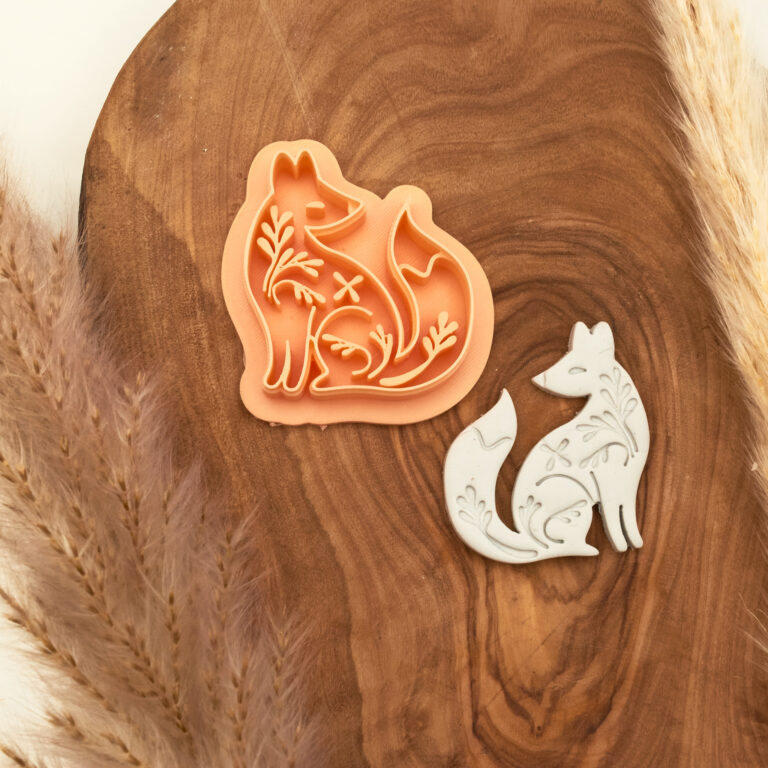
The polymer clay finish you apply is the last step in a process that starts with the cut. A clean, precise edge takes any finish evenly and looks polished under every sheen level. A rough or torn edge is magnified dramatically under high-gloss UV resin and visible under even a matte varnish. Starting with a well-made cutter makes every finish work better. Browse the full range of polymer clay cutters, tested specifically for clean edge release.
Storing Your Polymer Clay Finishes
Brush-on polymer clay finishes like Vallejo should be sealed tightly between uses to prevent skinning. UV resin must be stored away from light to prevent premature curing. Keep them all at room temperature and away from direct sunlight. Replace any product that has thickened, clouded, or changed consistency as degraded finishes produce unreliable results regardless of how good they were originally.